Showing posts with label 21st century women. Show all posts

August 9, 2010

Life Without the Opposite Sex: Why Not?

Women should never "settle" with a man in order to have a child. Granted, women are created by God to have longings for procreating and nurturing, and I believe this is evidenced in the fact that women will go to all kinds of technological extremes to have their own biological children. But this desire should never supersede the proper context ordained for raising children. While there are purportedly many different family models that work in our world today, the family model that is the true cornerstone of civilization, that honors God and respects life at all stages, is one that begins with a God-centered relationship between one man and one woman. A woman who "settles" so that the alarm on her biological clock does not sound before the childbearing milestone slips through her fingers is the personification of self-centeredness. Actress Jennifer Aniston argues that women should not settle, not because of any reason I just offered, but because so many other options (assisted reproductive technologies - ARTs) are available to women today. 
“Women are realizing it more and more knowing that they don’t have to settle with a  man just to have that child...Times have changed and that is also what is amazing is that we do have so many options these days, as opposed to our parents’ days when you can’t have children because you waited too long.” 
Aniston made this statement at a press conference discussing her new movie, The Switch, another story about a woman who decides to get pregnant with the help of a sperm donor.This movie is certainly not the first to discuss the options women have in this biotech century, The Switch comes after two other recent movies about sperm donors including The Back-Up Plan and The Kids Are All Right. Going mainstream with these options is not just about promoting scientific progress in reproductive technologies, but about removing so-called prejudice against alternative families. But we shouldn't be surprised that Hollywood would be the purveyor of secular-feminist propaganda.

Christianity Today recently asked some evangelical leaders about their response to the defeat of Prop 8 in California. Matthew Anderson's comments speak well for what I believe should be the church's focus in areas of bioethics and women's issues in general.
Practically, I think we have relied too heavily on the will of the majority as our foundation for our legal actions. While political orders must on some level be representative of the people to be legitimate, our founding fathers set up a representative democracy for a reason. Without rejecting efforts like Proposition 8, politically conservative evangelicals should shift their focus toward equipping the next generation of leaders with the philosophical and theological training they need to affect society and government from the "top-down." Majorities are unstable, and while traditional marriage has the upper hand now, it may not in 20 years.
Christians definitely need to stay engaged in the public square on all issues that continue to impact our culture, but in agreement with Matthew Anderson, we need to be intentional and focused about equipping the next generation to think through these issues theologically, and prepare our future Christian citizens and leaders to be unabashedly Christian as they argue these issues in the market place. But this isn't just about the future of culture, but the future of the church and the role that Scripture plays in the lives of believers. New traditions will be in place in a few short years, and terms like "traditional marriage" and "traditional family" will have been shed of all meaning. But terms like "biblical marriage" and "biblical family" will always have meaning because they always point to a source.

But back to Aniston's comments, she is correct, women today don't have to "settle" in order to have children--from a technological perspective, anyway. But without a Christian worldview framework to consider the purpose and role of family and childbearing, what more can we expect? No matter what the law or science may permit, the people can willingly reject it when they have the ability to think theologically.

April 16, 2009

Mama's Got a Fake I.D. (Book Review)


Mama's Got a Fake I.D. (Book Review)
Author: Caryn Dahlstrand Rivadeneira
Waterbrook Press, 204 pages

This is not a book about egalitarianism vs complementarianism, career women vs. stay-at-home moms. It is also not a treatise against feminism. But before I even opened the pages of the book, I was struck by the blurb on the back cover. Check it out:

"No one begins life as a mom. Before you have children, you are an amazing combination of friend, daughter, confidant, visionary, encourager, and thinker. You start out in life using your gifts and abilities in a surprising variety of settings. Then you have children and the role of mom-as wonderful as it is-seems to consume you. It's easy to lose your identity when others see you as a mom and little else. What happened to the artist, the teambuilder, the organizer, the entrepreneur, the leader--the person you lost touch with?"

Frankly, if this is all anyone read of the book, they would understand clearly the author's intention is grant moms the permission to use their gifts and talents to the glory of God, to remind them that they can be a mom and a writer, singer, cook, puzzle solver, or trumpet player. These moms have teaching gifts, communication gifts, leadership abilities, can enjoy fixing small appliances, and planting a garden. To remember that these things contribute to your identity, including who you are as a mom, is neither to elevate them over motherhood or to intice women to leave the home to pursue a career. They simply are....and all that from the back cover!

I eventually want to get to some of the actual meat of this book, but knowing what so many women in the church are reading and believing, I find it necessary to deal with the ideas associated with the confusion many women will no doubt have about this book. Let me be clear, this is not pop-psychology baptized in scripture, but it offers a real biblical alternative to the spiritualized ascetism that has been mandated for women in the evangelical community. Being a mom, a mom who loves being a mom, a mom devoted to her family and her Lord, need not be a woman who buries her gifts, hides her interests, and squanders her talents.

"When we wrestle with our identities, we want to know who specifically we are. Who we were made to be. Why we're gifted the way we are--and how that fits into our role as mom as well as our lives as women who follow Jesus."

When conversations ensue about women's roles, I believe a great deal of equivocating is done. When we talk about the identity of a woman there is no necessary denegration of her role as mom. Yet the two are often confused. As well, I believe the encyclopedic fallacy is committed when we speak of the lives of women. The Bible simply does not provide exhaustive details of how women's lives ought to manifest day to day. Caryn points out in this quote, clearly not pitting our identities against our roles, how God created us in his image, yet unique in desires, gifts, and talents to function in our own unique life circumstance. Sure, many women are mothers, but not all women are married to the same man in the same house with the same income. Our lives are as unique as our identities. As I believe this book aptly addresses, our role as mom can often overshadow how we are moms.

There are no generic Christians and that moms are getting stuck with generic identification inhibits the disciple-making and fellowship of the church. While our faith represents for us the only worldview that believes in a personal God in touch with the intimate details of our lives, our church life often communicates otherwise. Caryn implores us to adopt a refreshing alternative:

"We love who your kids are, and we love who you are. We can't wait to see what God has in store for you. We know that your gifts, your personality, your passions, and your whole self can enhance this community."

Mama's Got a Fake I.D. will give you the courage to be who you are, not because you have any particular rights or demands that ought to be heard, but because God created you to serve your family and the body of Christ in very unique ways. Generic products have come a long way over the years, but the labels simply hide the essence of the product within. This book is as much for the church as it is for women who might be struggling with their own identity, or wondering if it is ok for them to retain the gifts and interests God has poured into them. WFC

November 18, 2008

Foundations for Holy, Obedient Living

"...that we should be holy and blameless before him" (Eph 1:4) not only expresses God's purposes in electing us to salvation, but I believe it sums up the message of Ephesians and the goal of the Christian life. Ephesians 1:3-23 contains the words of a prayer from Paul indicating several theological truths foundational to the purpose of the rest of the letter.

In the past tense, Paul writes (Eph 1:5) that all believers were predestined for adoption (huiothesia = huio/son, thesia/placed)...planned in eternity to occur at some point in time. Similar to our earthly conception of adoption where a child is placed in the care of another family, to become a permanent member of that family, God has placed us in His family. Paul prays that this is "according to the purpose of His will." Here the word purpose comes from eudokian meaning good pleasure or desire. And certainly, it is God's desire--His requirement--that "we should be holy and blameless before him" (Eph 1:4).

Paul continues in his prayer, which flows logically and flawlessly, declaring in the present tense that "In Him we have redemption" (Eph 1:7). The word redemption is related to apolutrosin which refers to deliverance or a ransom paid. Pointing to the Cross, Paul prays this doctrine of redemption, showing how we are (through the blood, the ransom paid) and how we are becoming "holy and blameless before Him" (Eph 1:4). We assume with Paul that the recipients of this letter are believers, which is why he speaks so affirmatively of having redemption.

Finally, Paul prays about our present tense inheritance, or kleroo ((klay-ro'-o) in the original language (Eph 1:11) that is guaranteed for us "to acquire possession of" at a future point in time (Eph 1:14) as a consequence of the sealing or securing of our salvation by and through Holy Spirit (Eph 1:13).

Each of these theological truths are intended to be understood by the recepients of this letter, including you and I. But why exactly is Paul praying these truths? The answer to that is found in verses 15-23 where he begins "For this reason" (Eph 1:15) and is fleshed out in Eph 1:18-20,
that you may know what is the hope to which he has called you, what are the riches of his glorious inheritance in the saints, and what is the immeasurable greatness of his power toward us who believe according to the working of his great might that he worked in Christ when he rasied him from the dead...
We can only take joy and comfort in the Lord if he is all powerful and has had our lives in His hands for all eternity. If at any point the opposite were true, then Paul could not speak of our past tense adoption and then there would be no trust in a present tense redemption or present/future tense inheritance. But because of God's sovereign power which has held history history together, His "immeasuarable greatness and power" that saved us and raised Jesus, there is a basis for His purpose "that we should be holy and blameless before Him" (Eph 1:4).

So as Paul brings this prayer to a conclusion, it begins an exciting letter to a group of believers in a decadent society full of sexual immorality, false religion, and self-indulgence. That doesn't sound much different from the landscape of 21st century America. Chapters 2-6 explain further how God has actualized our hagios, our pure and blamess position before the Throne, but also how the members of the Church have been called to responsibility in living out the Christian life. While we have been made holy, we are being made holy. God has accomplished our redemption, and we participate in our sanctification through obedience by the power of the Holy Spirit.

November 13, 2008

Prochoice Feminism Reaching Out to Young Women

In the Christian community, we do a great deal of ministry to women in the church, including young women. I wish women's ministry proper did more with the high school and college aged women, and I'd like to be a part of that shift in culture. But what about the young women who are listening and looking for truth, who might not be in church or even in a churched home? I can tell you -- no, I'll show you what NARAL is doing.


We wonder what's going on in today's culture...how a young America can vote for change that lacks definition, can vote for candidates who are rabid pro-aborts, can embrace religious pluralism while being hypocrites toward evangelicalism. It happens when young America is left to figure things out on their own....or when organizations like NARAL and the Feminist Majority provide the only answers to their most difficult questions. I wish I had the financial means to be a voice to today's young women, validating them as human, as professionals, as thinkers, as achievers, as the future of our society in all of its quadrants. In the meantime, the biggest muscle is coming through campaigns such as Free.Will.Power.

October 26, 2008

Women's Ministry: Why Ethics Matters

At the risk of being misunderstood, it seems to me that Christians often needlessly spiritualize how we fulfill the call to glorify God.(1) Let me explain. There are times when we say that we are praying about matters when what we are really doing is avoiding a reasoned decision because that might be less than spiritual, or too human. And sometimes when we talk about matters of right and wrong, we avoid injecting any sound ethical principles and, instead, tell our brother or sister that their situation is between them and God. To be fair, there are times that these might be the most appropriate statements to make, but it goes against the teachings of scripture to de-legitimize the role of the mind or the pursuit of the holy life. Our Christian walk cannot be reduced to a Holy Spirit intuition or a lack of ethical reasoning.

The theologian L. H. Marshall puts forth this idea that for Christian living, the Holy Spirit functions as a spontaneous power that mystically causes people to know right from wrong. He said,

The Spirit of God in action in a man’s heart was an adequate ethical guide, and that a man under the sway of the Spirit knew from within what the will of God was and was enabled both to will and to do… (2)
This view not only confuses the entity referred to as the heart (the mind), but it under-estimates the impact of unconscious and conscious beliefs we retain. As well, it ignores the deceitful nature of the heart (Jer 17:9). But the New Testament theologian G.E. Ladd writes,

It is striking that Paul does not appeal to the Spirit as a direct source of moral enlightenment. Paul is conscious that the Holy Spirit reveals the things of God (1 Cor 2:10), but this does not mean that Paul feels himself to be independent of the Old Testament and the teaching of Jesus.(3)
Ladd shows how Paul’s letters communicate the reality, that new life comes from the Spirit, but that we are commanded to actually participate in this by walking by the Spirit (Gal 5:25).

To bring more clarification to this topic, consider the distinction that is made between law and grace. Paul never insisted that principles of conduct went away with the Law and that the Holy Spirit would provide an answer for every dilemma we face. For redemptive purposes, Christ fulfilled the requirements of the Law yet he also provided a summary for it’s ethical requirements in Matt 22:37-29 in the Great Commandment. Ethical reflection toward a life that pleases God was never replaced with a mystical, abstract approach to living. We are always expected to obey, though our salvation doesn’t depend upon our always succeeding. Yet any ability to obey—to please God—is found in our new nature accounted for through the regenerative work of the Spirit.

For men and women, many of the decisions we face in today’s world are not to be answered with specifics contained in Scripture. Technology, economics, and entertainment leave us wringing our hands sometimes, not entirely clear on how to think Christianly about these areas. But Ephesians 5:10 calls each of us to discern what is pleasing to God—not to guess, hope, or feel….but to discern. Chapters 2-5 in Paul’s letter to the church at Ephesus focus largely on how we participate—ethical reflection—in pursuit of the holy life. This is a very practical, tangible section of scripture rooted in solid teachings on salvation and God in contrast to our sinfulness. The letter concludes with application in marriage and family. But this is hardly exhaustive in content, and many other areas of our every day living call us to reflect on our walk.

In considering the many perspectives that women in particular face in today’s world, decisions from reproductive technologies and birth control to careers, relationships and matters of the family, room needs to exist for deliberate ethical reflection, grounded in a firm foundation the acknowledges the supremacy of God. The ability to move from Scripture into the specific areas of life that are in question is the process of doing theology. Knowing what the Bible says in its context is the first step, but bringing it to bear on every square inch of your life is where it all becomes real.


1. If you are confused after reading this essay, please contact me for clarification. sarahflashing@gmail.com

2. L.H. Marshall, The Challenge of NT Ethics (1947), p. 220.

3. G.E. Ladd, A New Testament Theology (2002), p. 563.

October 17, 2008

The Feminist Majority Prefers Women Kept Stupid

Yesterday, the Feminist Majority put out a statement against Colorado's Amendment 48. Apparently, Amendment 48 would recognize the personhood of embyos. This is what the Feminist Majority had to say about that:
we want to make sure that women have more rights than an egg!
Well, either their statement reflects a profound ignorance--because those of us who are prolife do not equate eggs with embryos-- or this is what they have been wanting to say all along. With smoke and mirrors, they speak of the embryo in its pre-fertilized state so as to avoid the scientific truth we know about all embryos...that they are living human organisms. Eggs are not. Why do they do they insist on ignoring this scientifically obvious difference? Because the Feminist Majority really does believe that grown women have more rights than smaller humans, and that this goes against the conscience of the majority of Americans. It is necessary to their agenda to obfuscate this issue because an egg with moral worth is not an egg, its an embryo. Young women in their reproductive years are being psychologically primed to donate their eggs for research purposes, but these eggs never remain eggs, they become embryos. If they are persuaded to believe falsely that their eggs forever remain eggs, then they don't have to consider that the eggs they give up actually become their embryonic offspring. What woman is not repulsed by the notion if giving up her offspring for research? For the Feminist Majority to speak of fertilized eggs as simply eggs is scientifically false and a deliberate attempt to confuse the same women they believe have more rights than these much smaller humans. How can they, the Feminist Majority, claim to respect the rights of women if they can't respect our basic intelligence?

September 20, 2008

Gospel Today, Southern Baptists, and Theology in the Pew

Reportedly, the SBC's Lifeway Christian Bookstores have removed the current issue of Gospel Today from their sales shelves in more than 100 of their stores. Chris Turner, a spokesman for Lifeway Resources, said the cover was not the reason the magazine was pulled.

The buyers said the statements that were in it took positions that were contrary to what we would say...It wasn't so much that there were women on the cover.

What I find very interesting is that the contents of Gospel Today should have been in question in the past. Prior to this issue, other cover articles have included prosperity teachers Bishop T.D. Jakes (who rejects the doctrine of the Trinity) and Pastor Paula White. Yet the same folks who are up in arms over the current cover article don't seem to have an awareness about other equally important--likely more important--doctrines this magazine highlights, or else we would have heard about their concern before. This ultimately points to the overall ignorance of the market at Lifeway Bookstores, certainly not their theological sophistication, otherwise this would have been off the shelves a long time ago.

On the other hand, there is something to be said about having materials available to the Christian community that provide first-hand knowledge of what other schools of thought are teaching. I've never read Gospel Today and don't expect to even pick up the most recent copy. But sometimes people need to read things for themselves instead of being coached on the beliefs of others.

I am not an advocate of women as pastors or elders, but I don't believe a person's salvation or commitment to Christ is or should be in question when someone holds an opposing view on this particular issue. This is not a matter of heresy and certainly not worth the negative publicity that will result, especially in light of the current cultural discussion of women as leaders. For the SBC, this is an embarrassment. For Gospel Today, it will sell more magazines.


September 13, 2008

Christian Charm: Loving God with the Heart, Good Posture, and a Clear Complexion


I know now I'm not crazy and that I've understood and perceived matters correctly--this book affirms it. Ministry to young women is in trouble. My friend Karen introduced me last night to a little booklet called the Christian Charm Notebook. Her copy is from 1972, but you can--shockingly--still purchase your own copy on Amazon and Christianbook.com. I am greatly disturbed by the fact that it is still available. So if you're looking for a book to help you grow young women who love God with their heart, soul, and mind, then this book isn't for you. Not a single mention of the life of the mind is to be found in it.

The book is full of a lot of advice on posture, hair styles, and manners. Not bad things to know about I guess. It begins by describing the inherent beauty of being born again, contrasted with the unattractiveness of unbelief, utilizing storm clouds, sunshine and heart-shaped faces to depict this distinction. Unfortunately, it all goes downhill from there, because what it accomplishes is equating godliness with physical attractiveness, aka Christian Charm. In lesson 1, the student is encouraged to consider her inward appearance:
I want to be lovely and beautiful within, so that I will please God. I realize that I cannot change my heart merely by self-effort. I realize that I must allow God to enter my life and do His transforming work within me.
And then, she is encouraged to consider her outward appearance:
I want to be attractive and charming, so that I will please others. I realize that this will not come about through wishful dreaming. I realize that I must work toward that goal diligently and steadfastly.
So then the students are asked to fill out of things they would like to change inside and out. Remember that the goal is to please others--when did it become ok for women to be objectified...by the church?!?

You probably think that this book can only get better. Trust me, it doesn't. Lesson 6, page 31 is titled Femininity--My 'Crowning Glory,' stating that to be truly feminine
  • See that you look like a girl--not a boy! (1 Cor. 11:15; Deut 22:5)
  • Don't usurp the role of the male (1 Tim 2:12-13; 1 Pet 3:7)
  • Cultivate a quiet, gentle spirit (1 Pet 3:4; Titus 3:2)
  • Value your chastity (Prov 31:10; 1 Cor 6:19; 1 Tim 5:22)
The next page then provides a chart that shows those things that destroy femininity, and those things that increase it. Some on that list described as destroying femininity include "a bulky, flabby figure," "a dead-pan face," "a slouching posture," a "raspy, gravelly voice," "mannish attire," and "pessimism." Some that increase femininity include "a trim, disciplined body," "dainty, pretty clothing," "a lovely, graceful walk,"a queen-like posture," "modest self-confidence," and "ladylike reserve." For women of all ages who haven't been groomed for beauty pagents, this material could be devastating to their walk with Christ. If my spirituality is measured by the cleanliness of my cuticles (yes, page 35) then we have serious problems.

Some would immediately look at this book and just chuck it aside, regarding it as outdated. In fact, a review at Amazon said just that. "This is a sadly outdated book...a waste of money." I want to suggest that this book was NEVER dated. When it was first published in 1967, it was irrelevant. In 1950, it wasn't appropriate for girls. And in 1900 it was still a shameful attempt to box up femininity. This book affirms so many destructive behaviors that cause many young women to become obsessive, and then self-destructive when they learn how hard it is to please everyone else. Yes, a woman should care about her appearance, but any more than a man? If she has short hair, is she any less loved by God?

This books claim to fame is that it "exalts TRUE FEMININITY--modesty, purity and honor, rather than a bold outward display!" The problem is, it fails to counter culture's obsession with appearance in that it actually adopts similar standards. Christian Charm is clear that they are obsessed by appearance and equate it to a certain level of spiritual maturity. But there is truly nothing modest about this, and it will destroy the esteem and faith of so many young women exposed to it.

September 8, 2008

Women's Rights: Defined by Who?

Political commentators, popular feminists, and many writers in the blogosphere are pressing the issue of unfettered reproductive freedom as a fundamental, agreed upon right for all women and that anyone who disagrees with their views can not be pro-woman or an advocate for women's rights. The problem is, we don't all accept abortion and infanticide as a fundamental right for women, we see those as a violation of fundamental human rights, acts against human dignity.

No doubt inequalities exist between men and women throughout the world, and we can speak together against the atrocities occurring in the Middle East and other parts of the world against women in the name of family honor. But there is nothing in the core of our humanity that even implies that killing the unborn is a good thing, let alone a right for anyone. There is neither pride nor fulfillment in the destruction of our own kind, yet it is believed to be a universally understood human right.

Women's rights ought to be only those things that build character and bring the opportunity for peace and fulfillment to women's lives, the ability to pursue happiness without doing harm to others. Right now, abortion is legal, and as a result it is inferred as a fundamental right, but what is legal is not always moral or good. Once it was the case the slavery was legal, or that it was acceptable to discriminate on the basis of race. Appealing to the laws of the land is not the best argument for women's rights, and neither is the radical, seared conscious of those who promote abortion as a woman's fundamental right. I have little hope for a society that grounds women's rights in the willing and active violation of human rights.

Gllian Parrillo, the chair of NOW's pac, stated
We recognize the importance of having women's rights supporters at every level but, like Sarah Palin, not every woman supports women's rights.
Reproductive inequality may have been the thrust of 2nd wave feminism, but the pursuit of this these so-called rights has tipped the scales and prevented fathers of the unborn to keep their human rights intact. There is nothing right about these "women's rights" and the term is in need of some serious redefinition.

Men's and women's rights should not differ in any significant way, but perhaps if our laws were tougher and enforcement less lenient, women might enjoy a life of less physical vulnerability and violation. We should understand women's rights as something more decent and beautiful in juxtaposition to that which is proclaimed by extreme feminism.

September 2, 2008

Where Women's Ministry Meets Youth Ministry

I've been reading The Good Girl Revolution over the weekend and will be posting a review of it in the coming days. Due to all the issues that young people face today, having to contend with an overly sexualized society and made to feel bad about being good, it's no wonder there is so much depression and despair among our youth. But I can't help but to probe a bit deeper into the disconnect between those who should be our role models and those who actually are--if this is a core issue with regard to this dilemma. In fact, the problem is not just within pop culture where young people admire the the Paris Hilton's and Brittany Spears' for their trendy clothes and rebellious spirit, the problem may also exist within the church. In what I'm about to say in no way suggests that the evangelical community is perpetuating the problem of sexualization, it's a different problem but is at its foundation fundamentally the same...a lack of appropriate role models.

Let me first begin by saying that I understand and value the existence of powerful youth ministries, and I'm familiar with many leaders in this area who are doing marvelous work. But....yes, there's a but. I can't help but wonder if the existence of youth ministry is in some way preventing the older women from having a Titus 2 influence on the younger women in the church. And this is a 2 way street...maybe the older women just aren't interested in influencing the younger generation. That's a problem.

I've attended a lot of women's ministry events over the years, and only a few have had a focus on the older women relating to the much younger women. We spend a lot of time talking about how we need to bridge the generational gaps, but often we end up not pursuing anything with the much younger women not involved in women's ministry. The excuse is that they are involved in youth ministry. It's not our job. They don't think we're cool. We're too old. We do things differently. Change how we do women's ministry? I think not. These are some of that attitudes, conscious or unconscious, that impact our inability to reach the younger women in the church.

For the biblically instituted ministry between women to occur, access needs to be granted and coordinated within the local church. Younger women (teens, high school, college) should not be viewed as aliens to the women's ministry, as too immature to be involved. No, the women's ministry should view their role as equipping young women for successful, godly living in all areas and spheres of life. From dating to homemaking, cultural issues to biblical studies, older women need to be actively influencing other women, cultivating an environment where positive and significant role models are readily found.

With this view of ministry in mind, women's ministry had to change. No longer can it be exclusively about the social activities and daytime bible studies. Engaging the young women means engaging their world, knowing everything about it and being ready to give an answer to them for the hope we have in Christ. It's about knowing theology and engaging cultural understandings of God and spirituality. It's about knowing the self...the sinful nature and our need for a savior, and how man seeks continuously to be autonomous from God's sovereign hand. In other words, women's ministry has to broaden her understanding in order to broaded her audience. Leadership teams need to invite younger, godly women to help bridge the generational gaps (intellectually/functionally) and youth ministry needs to encourage the development of young women in the context of women's ministry. Some churches might even consider a youth women's leader who is also a part of the women's leadership team. The bottom line is, if women's ministry wants to continue having a real impact on the lives of women into the future, it must consider new avenues of action.

This is a topic I often speak about. Should you have any interest in this message being communicated to your women's ministry, please contact me to arrange for a time. sarahflashing@gmail.com

August 27, 2008

Women's Leadership Conference--Oct 18, 2008

If you're in the Chicago area, you want to plan to attend the 1 day conference for women's leaders--in church, culture, or the marketplace. It's a conference for all ages and designed to accommodate your busy schedule. Find the details here.

Who are the conference speakers?
Session 1
From Dial Ups to Smart Phones: Women's Ministry Then & Now
Felecia Thompson, Trinity Christian College, Palos Hts IL

Session 2
Kingdom Writing: How Your Words Serve Heavenly Purposes
Caryn Rivadeneira, Christianity Today: Gifted for Leadership

Session 3
The Caris Approach: The Third Voice
Angie Weszley, Caris Pregnancy Clinics

To register or to obtain more info, email wm@convergemidamerica.org

August 7, 2008

Is Dim Economy Good for Biotech Industry?

CNN reported yesterday that the dim economy is probably a primary reason for a recent increase in women wanting to sell their eggs and the upsurge in calls to fertility clinics. Cited was one young woman named Michelle who has 2 kids and in need for a way to pay for college. Like Michelle, many women, for whatever reason, are living paycheck to paycheck. Selling their eggs may provide temporary financial freedom, but it may also be the cause of serious health problems.

Right now, the biotech industry, in its pursuit to conduct embryo-destructive research (ESCR), is plagued by 2 problems, a lack of funding and a lack of eggs. And even though recent progress has been made though iPC's, embryonic stem cell research is still considered (for some reason) the "gold standard" or the "holy grail." Women like Michelle who find themselves vulnerable to this economy are easy prey for the biotech industry as it is unclear whether there are protections in place that prohibit fertility clinics from obtaining eggs to transfer to research facilities. The ban on payment for eggs in states where it exists for biotech firms ought to apply to fertility clinics as well, whether or not the science is speculative.

Speaker of the House not Entirely Mum on Faith in the Public Square


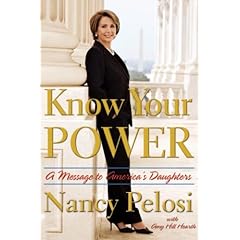
In an online discussion on August 6, Nancy Pelosi discussed her new book, Know Your Power: A Message to America's Daughters, with the listeners of Book World Live. As was written in the Washington Post, the book is about "the women who have inspired her in her personal and professional lives, and about the lessons she wants to pass on to the women in her own family as well as around the country."

One of the participants in the online interview inquired about the role faith has "clear[ly]" played in her life. To this, Pelosi replies:
My faith has always been central to my public service. Growing up in Baltimore, we were raised in a devoutly Catholic family and taught that we had a responsibility to other people and that we must always honor the spark of divinity in each person.

When I became Speaker, I quoted St. Francis of Assisi, the patron saint of San Francisco: "preach the Bible; sometimes use words." I try to follow that guidance in my work - to remember that we are all God's children and we have a responsibility to each other and to our planet - God's creation.

I'm not quite sure what it is about Pelosi that makes it "clear" to this individual that faith plays an important role in her life, and I'm a bit confused about this devout Catholicism she seems to have experienced as a child. "Responsibility to other people," especially as a devoted Roman Catholic, includes a responsibility to the unborn, something Pro-Choice Pelosi lacks in her worldview.

What are we to make of Pelosi bringing her faith into the public square? Of course, she is suggesting in this quote that she utilizes the words of Assisi to justify an inexplicit use of religious language. But this is, in and of itself, a religious argument for a certain religious language and mission. Simply because she or any other liberal doesn't quote the Bible chapter and verse does not make them secular--secularism truly is a myth. As well, what is most clear is that from her own words she is functioning according to a religious worldview. We may not appreciate its contents and how it works itself out, but she has made it impossible for herself to argue against religious worldviews making themself apparent in the public square.

August 1, 2008

Join a Movement: Christian Women Bloggers Network

We talk about many things: parenting, philosophy, cooking, theology, music, pop culture, Scripture, and much more. But in the spirit of Dorothy Sayers, we may differ in a great many ways, but we find similarities as human and in the experience of womanhood.

As Christian women bloggers, join the new network that will bring us together in our sameness and our differences as we connect in the blogosphere and face to face. Be watching for a network gathering in the not so distant future!

July 22, 2008

NARAL on the Secular/Religious Divide

Yesterday I mentioned in a post that fragmented thinking "has taught people to believe that certain matters are to be addressed by their doctors and certain matters are to be addressed by their pastors." In other words, an error often made within the Christian community is the split between the "spiritual" and everything else. Obviously, Christians aren't alone in this regard, perhaps they are taking cues from NARAL?

On NARAL.org, it states: "If you are facing an unintended pregnancy, it is important that you talk about your feelings and emotions with someone you trust, be that a family member, a close friend or a member of the clergy. It is also important that you consult a health care professional to discuss your options."

Did you catch that? You can talk about your feelings and emotions with your clergy--not the truth, but your feelings and emotions. The role of clergy in this circumstance is purely therapeutic where the role of the health care professional is about the facts, the "options." This fact/feeling divide is grounded in assumptions about the nature of religion, that it has nothing to contribute to the decision at hand. By relegating religious leaders to the domain of emotions, it deems them irrelevant to any discussion related to the fate of the pregnant woman and the unborn child. As well, it assumes that abortion is primarily a medical decision and that there are no spiritual dimensions to the situation. They have determined, as an organization focused on "health care," that philosophical/theological reflection has no place in discussing "the options."

It also needs to be pointed out that they believe in the myth of the purely secular, that they and abortion providers have no worldview commitments.

So you're wondering why this is news. It isn't to me, but for some, it needs to be clarified that the worldview being expressed here has a view of religion as fiction, or something created by culture. For them, life begins only at birth because that is when a person begins to be enculturated. The meaning of life isn't found in anything metaphysical, but in the influence of culture who has created meaning for itself. Until birth, there is no meaning, rendering preborn life meaningless.
Sent via BlackBerry by AT&T

July 21, 2008

Staking a Claim: Women, Theology, & Bioethics

Dorothy Sayers, theologian, lecturer, author of detective fiction, and friend to C.S. Lewis, responded to the question of what is a “woman’s point of view” as it pertains to literature and finance. She said “…don’t be silly. You might as well ask what is the female angle on an equilateral triangle.”[1] The point to be taken from this exchange is that for those things which are a matter of basic fact, there is only one perspective and that is a human perspective. As it pertains to other matters, Sayers continues,

“…I prefer to think that women are human and differ in opinion like other human beings…you can not ask for ‘the woman’s point of view,’ but only for the woman’s special knowledge…’”[2]

Women today have differing points of view in matters of bioethics, yet the same experience of womanhood, though always with some exceptions. But the most dominate expression of this experience, this “special knowledge,” is not from the voice of evangelical women who, as theologians, can provide meaning and communicate hope, but from secular feminism. This is not to suggest that there are no evangelical women engaging in theological dialogue, but as it pertains to being an influential, prophetic voice in bioethics—in the academy, church, and in popular culture—few women address bioethical matters in this way. A cross-centered evangelical bioethic offered through the theological voice and experience of women can serve as an apologetic for a Christian worldview, helping to put to rest the suspicion and charges of female oppression by evangelicalism and evangelical bioethics that are often made by secular feminism, charges that view human autonomy as the highest value. In society and within the community of evangelical bioethics, woman as theologian offers a unique and fresh perspective to all levels of discussion, from academic scholarship and education to more public activist roles.

Secular Feminist Bioethics
Women’s issues, especially those related to women’s health and bioethics including abortion, pregnancy, contraception, and reproductive technologies have by default, come under the domain of secular feminism in popular culture. For years, since the second wave of feminism leading to Roe v. Wade until now, these women’s issues have been addressed primarily by secular feminist voices, and by specifically feminist bioethics. Academic journals like The International Journal to Feminist Approaches to Bioethics, blogs like the Women’s Bioethics Project, and popular organizations like NOW and the Feminist Majority exist to develop the next generation in the academy and in popular culture. The website of Women’s Bioethics Project states

Women’s health concerns have always been at the core of the Women’s Bioethics Project’s work. Moving beyond narrow conceptions of women’s health, we will be focusing on issues such as aging, women’s participation in medical research, the impact of traditional care giving roles on women’s lives, and end-of-life decision making. We have a series of initiatives planned to help bring these issues to the attention of the media, increase women’s involvement, and impact public policy.

It is clear that the focus women’s issues is expanding beyond what has been traditionally conceived of as important to women—contraception, abortion rights, infertility, reproductive technologies, and so on. And while feminist bioethics are expanding, with the persuasive power of mythical neutrality, evangelical women as theological bioethicists have yet to speak prominently in the theological academy, church, and in culture to these issues. With all of these voices speaking to women of all ages, and with women eagerly listening, it has to be asked, where are the theological voices of evangelical women? In there book, Living on the Boundaries: Evangelical Women, Feminism, and the Theological Academy, Pohl and Creegan ask similarly, “where are the good women?”[3] The gender discussions within evangelical circles are no doubt a contributing factor to the scarcity of evangelical women as theological bioethicists. But whether complementarian or egalitarian as it relates to women’s roles in the church and family, there is ample support in Scripture for women to be a strong voice in the academy, church and culture without concern for compromising conservative views of gender roles.

Staking a Claim Among Women
One might wonder why theologically-informed female voices need to be available as prominent voices in the church, academy and culture. There are no new metaphysical truths to be uncovered, we have a grasp on what the bible teaches on human dignity and the great commandment to love our neighbor, so why does the gender of the messenger have any relevance? Aren’t the prominent, sound voices of evangelical men in bioethics enough? I am especially thankful for all those I have and continue to learn from in the field, but I also see the gap of influence of women on other women – and on men, who, as a member of the human race, experiences life a bit differently. The way to answer the question about the importance of women’s voices is to see the women who have sought women’s voices due to their “special knowledge,” their experience. The female evangelical theologian in bioethics can offer a fresh and unique perspective, not because she offers new knowledge on the basis of her womanhood, but because she identifies with the same joys and pains of half of the people in our culture. The previously mentioned organizations have a great deal of influence in our culture not because they force their message on women or anyone else, but because women want to hear from them. Women are listening to these women, and these women come from all parts of society including the church. Even further, the fragmentation of faith and reason has led to further splits in our thinking, and quite noticeably between health and reproduction and our spirituality. Concerns about women’s health in the evangelical church often receives limited preemptive attention because this fragmentation has taught people to believe that certain matters are to be addressed by their doctors and certain matters are to be addressed by their pastors.

Crucial to the future of evangelical bioethics is the proactive willingness to develop theologically informed women bioethicists for work in the seminary, in the church, and in culture. Women continue to dominate church membership—60% as recently reported by Barna—and continue to enter into higher education in increasing numbers. Evangelical women who desire theological training find themselves in strange territory, one stating “I guess I’ll be too liberal for most evangelical institutions and too conservative for most mainline schools.”[4]

The Scriptures contain numerous stories of women’s experiences as it relates to matters of reproduction and even end of life scenarios. There are obviously profound theological implications of these stories—the barrenness of Hannah and Sarah, the end-of-life grief of Mary and Martha, sisters to Lazarus—as well, there are practical lessons to be communicated to women in our world today. God cares about the details and he is not uninvolved in our lives. For evangelical women in theology today, the task is to take every thought captive to the obedience of Christ by taking ownership of these bioethical issues that have thus far been dominated by secular feminism.

The scope of this discussion is focused on the value of theologically-informed women’s voices for the sake of women, though it does not preclude the importance of her influence on men. But in terms of God’s calling on the ministry to women, I believe we can find direction for this work in Titus 2.

Typically viewed as instruction for how older women are to mentor younger women in keeping the home, I believe we can with all integrity see the broader implications of this passage in our contemporary culture. Titus 2:3-5 states:

Older women likewise are to be reverent in behavior, not slanderers or slaves to much wine. They are to teach what is good, and so train the young women to love their husbands and children, to be self-controlled, pure, working at home, kind, and submissive to their own husbands, that the word of God may not be reviled.

Bioethical issues never operate in a vacuum, and a decision—whether related to reproductive technologies or end of life questions—will always involve members of one’s own family. For the woman as theologian and bioethicist, with her special knowledge as woman, daughter, and perhaps as wife and mother, has the opportunity to teach “what is good” to women in the academy, church, and culture. But we must be willing to take our place in culture and no longer be willing for women’s issues to be owned by the voice of secular feminism. Through this, we may see the new trends develop in society at large in how we view human nature, life, the unborn, and the disabled. Ultimately, then, women as theological bioethicists have one more way to advance God’s kingdom to his glory. WFC


[1] Are Women Human? Dorothy Sayers Wm. B. Eerdmans Publishing Company (November 15, 2005) p. 41

[2] Ibid, p. 43

[3] Living on the Boundaries: Evangelical Women, Feminism And the Theological Academy. InterVarsity Press, June 2006. Page 31

[4] Ibid, 41.

June 19, 2008

'Today's Spiritual Giants Wear Lipstick'

Producing solid, intelligent written works often requires a lot of blood, sweat and tears. Well maybe not blood, but the process can be excruciating. Well-argued positions require facts and sometimes a wealth of understanding across multiple disciplines. Solid research and an acquisition of data with an ability to creatively communicate the results in a way that grabs the attention of the reader is a skill that takes time to develop. I'm still learning. Never is the regular use of broad sweeping generalizations or a tone of condescension considered acceptable among skilled writers, especially in the fellowship of evangelical writing and scholarship. And while I do not consider myself a scholar of any sort at this point in my life, I continue to practice the art of writing, always trying to pair readability with a high level of integrity.

So when I read books like How Women Help Men Find God, I well up inside with so much frustration because I can not believe that an otherwise intelligent person would write in this way. The title of this book seems harmless enough, appearing to be something every self-respecting Christian woman should own. But the level of disrespect this work has for women makes it impossible for any woman to respect herself any less.

How Women Help Men Find God is by the same author of Why Men Hate Going to Church. In How Women Help Men Find God, he builds on his perspective of the so-called feminization of the church and offers ways to reverse the trend.

There are several issues I have with this book that I hope to address in this post.
1. The condescending comments towards woman.
2. The overuse of generalizations and stereotypes.
3. The categorical errors.
4. The misunderstood problem.

The condescension and stereotypical views of gender begin on page one. Describing his first experience under the hood of a car, he writes
I had no idea this crazy tangle of wires, belts, and hoses even existed, much less made the car move. In the next few chapters, we will be looking under the hood of churchgoing. (Yes, I realize this is a guy type of analogy, I'm already training you to think like one of us.)
On page one of this book, Murrow is already trying to argue for some sort of polar-oppositeness, that women can't possibly be interested in cars or the type of thinking involved in this activity. I have known women all of my life who understand automotive needs with the ability to care for them on their own. Murrow definitely loses points with this statement, but I'll chalk it up to his having merely a casual view of femininity and masculinity, certainly not one informed by any theological research.

Speaking of the gender gap in today's church (60% who attend are women with only 10% of churches with an ongoing mens ministry, page 5) he writes,
No other religion suffers the huge gender gap Christianity does. In fact, Islam seems to have a bumper crop of men. So did the early church. In Bible days, men were the spiritual giants. Today's spiritual giants wear lipstick and eyeshadow. (p. 6)
Writing with a complete lack of appreciation for the fact that so many women are attending church, he drops the f(eminine) bomb, somehow thinking he is saying something substantive about women in the church today. Though my reading skills are limited to the English language, I have read some of the most difficult academic monographs in the disciplines of theology and philosophy, and yet I can't figure out what Murrow's point is regarding the lipstick and eyeshadow. In philosophy, we generally regard such comments as a fallacy. In this case, we can't even tell which fallacy it is. And regarding Islam, they also seem to have a "bumper crop of men" willing to blow themselves up and kill others in the process.

Murrow is also concerned with the hymn that are missing from the church pews (though even the pews are missing these days - not sure if women are to blame for that.) I share his dismay in this regard as many hymns are so rich and full of robust theological truths with timeless melodies and beautiful arrangements. But whose fault is it that these hymns are rarely sung during today's worship? And is he even correct that men better identify with them? Discussing his own longings for a masculine experience, he states:
My church was a soft and accepting place that was busy erasing men from hymns, liturgy, and Scripture. (p. 9)
Many of today's praise and worship songs are fine-tuned to the female heart. Some of these choruses make Jesus sound like our heavenly prom date. The concept of falling in love with Jesus may not bother women, but it feels weird to guys....You have a treasure chest of masculine music gathering dust on the shelf. It's called a hymnal, and within its pages you'll find rich veins of masculine expression, such as "A Mighty Fortress Is Our God," "Rise Up, O Men of God," and "Onward Christian Soldiers." I encourage you to sing these hymns as written, before they are gender-neutralized. (p. 92)
I can't be the only person that finds this alarming. And certainly there must be Christian men who are bothered by this sort of narrow-minded gender stereotyping. While Murrow very cautiously never points blame at women for the issues he is identifying throughout this book, he fails to see where the problem actually resides. The seeker movement is responsible for many of the failings in the contemporary church, seeking to bring an experience of entertainment to the chairs (again, the pews are gone), not working nearly as hard at making disciples. His corrective is really to perpetuate the seeker-driven mentality by changing the target population to men.
A man's worst nightmare is to become completely disabled, utterly dependent on others. A woman's worst fear is to be abandoned, left alone, and unloved. (p. 29)
Even if he provided stats to support this statement, I'm not sure I would embrace statement anyway. Of course, someone will argue that this is simply how men and women are wired, how could I argue with that? Without nuance, I find the statement simply condescending. He uses a fictitious "Sam & Sally" as a way of explaining this statement.
When Sam and Sally go to church, they hear a message like this: you need to give control of your life to God and enter into a personal relationship with the one who will never leave you or forsake you. For Sam to embrace this message, he would have to face his deepest fear--loss of control. But for Sally, the gospel means she'll never have to face her fear--she'll never be unloved. Who's getting the more attractive offer?
The teaching of the "personal relationship with Jesus" is something I've blogged about in the past and it is not without its problems. But this appears to be a case where Murrow elevates a sociological understanding of gender over matters of Scripture.

To conclude my thoughts at this point, allow me to share a final quote:
If we want to engage all persons, our churches should speak with a masculine accent....In this chapter, we identified the many currents that push our churches toward feminine values, expression, and reputation. If we want to avoid being swept downstream, we need to keep pushing toward the masculine. (p. 24-25)
Are we really going to view the church experience in terms of gender stereotyping? Does Murrow think that offending women is worth the corrective he suggests? And isn't he actually emasculating the men who don't fit into his paradigm of masculinity? These are all questions that need to be taken very seriously by those who are promoting this idea of the feminized church. As a complementarian woman, I am terribly disturbed by this high school approach to a problem that ultimately transcends gender. This is a human problem rooted in human arrogance. Treating the symptoms will not find a cure. That's been the problem with the seeker movement, it makes no sense to compound the problem.

How Women Help Men Find God is dependent upon gender stereotypes and fails to take into account the relative nature of femininity and masculinity that is cultivated by culture. I'd like to be able to enjoy being a Christian woman without my femininity defined for me by Christian men abiding by cultural stereotypes. Scripture provides my understanding of femininity, an area that certainly deserves more theological engagement in order to provide a more normative understanding of manhood and womanhood, especially from a reformed perspective.

June 1, 2008

Loving God, Living Contentment

Looking back on our lives, each of us is prone to think about the “shouldve’s” and “couldve’s”. “If I had made a different decision, life would be so much better.” Similarly, in the present, we often ponder the way things should be. As one writer[1] has expressed it, we act as if we’re living “plan B” while we await God’s “plan A” to rescue us from the current circumstance—as if it couldn’t possibly be “plan A.” Those who are waiting for the right job or right spouse know exactly what I mean. Although it is difficult to resist this way of thinking, every attempt must be given to pursue a life of contentment. In this regard, Philippians 4:10-13 states:

… I have learned in whatever situation I am to be content. I know how to be brought low, and I know how to abound. In any and every circumstance, I have learned the secret of facing plenty and hunger, abundance and need. I can do all things through him who strengthens me.

The Apostle Paul serves as one of many biblical illustrations of what it means to be content, even in the most difficult circumstance. But his ability to be content is not rooted in his own personal will power to endure or cope through sticky situations but in the strength provided to him by God to endure through all things, accompanied by the higher value of the advancement of the gospel (1:12).

Very few of us will ever experience the kind of life as that of Paul or any other missionary persecuted for the sake of Christ. This is not to diminish the day to day concerns each one of us faces daily, because we know, not only, that God cares about the details of our life, but that in his providence he ordained each day. The appropriate response then is to live in a way that accords to loving God with our heart, soul and mind. The person who is content in their life will focus on God and not on themselves.


[1] James, Carolyn Custis. When Life and Beliefs Collide. (Grand Rapids: Zondervan, 2001) p. 72.

May 21, 2008

Evangelism and God's Self-Disclosure

Inclusivism isn't dead because evangelicals aren't drilling the importance of systematic thinking in the lives of church members. Without examining how one held doctrine relates to or impacts belief of another doctrine, it can be easy for believers to hold on to opposing views. For instance, if you believe that only those who consciously place their faith in Jesus Christ are saved, you can't also hold that "God...may save some who have never heard of Christ" (Gagging of God, 279). This is a position called soft inclusivism and means essentially that those who live a life committed to the God revealed in creation, but not known to them as the triune Father, Son, and Spirit, can still be saved. Sadly, I recently heard Romans 1 explained in this way by a seasoned Christian woman, advocating that the passage is describing an opportunity for salvation to people who have never heard the gospel preached instead of the responsibility or culpability of a person to recognize that God exists and he is seen in all of creation and that there is a sense of order that cannot be ignored.

This isn't just a harmless perspective on a non-essential doctrine, it is a grave error in the handling of scripture and speaks to how even many mature believers haven't been taught how to think through the implications of a doctrine. God is just and loving, but man is, by nature, a sinner and needs to hear the gospel, needs regeneration, and needs to confess with his mouth that Jesus Christ is Lord - no other way about it.

If, perhaps, we give any credence to this view of soft-inclusivism, what is it we're saying about the role of evangelism? Is it not ridiculous to send out missionaries if God will save them anyway? I'm reminded of Ephesians 6:12 that states:
For we do not wrestle against flesh and blood, but against the rulers, against the authorities, against the cosmic powers over this present darkness, against the spiritual forces of evil in the heavenly places.
How can the person who does not know Christ put on the whole armor of God? How can they do battle? We must be more concerned with the doctrines we teach, but also with how each of these doctrines is integrated in our lives with other held beliefs. When inclusivism rears its ugly head in your church, bible studies, or book clubs, don't be shy about addressing it in the clearest terms.

May 12, 2008

Women's Ministry Leadership: Teaching Scripture, Avoiding Fads

I'm always looking for the latest book or study for womens ministry study groups. My expectations are usually low because there is so much fluff or theologically weak materials available. Pondering this problem caused me to reflect on the market altogether and why it even exists. While there are many bible studies that exist for men and for mixed groups, I question why there are so many more available to women...and I think its because there are so few womens ministry leaders with the capacity to teach without a study or curriculum. I'd love to be wrong. If there are more women who are capable of expounding on God's Word without the aid of a Beth Moore video or Cynthia Heald study, I'd love to know. I'm not saying those materials shouldn't be available, but it probably speaks to the composition of womens leadership in evangelical circles. What women in the local church are available and equipped to regularly teach directly from Scripture? Because, as it seems to me, that there are few women who can fulfill this role, we need to rethink some things about womens ministry.

1. If there are women gifted to teach in your church, what is preventing them from exercising that gift?

2. Encourage young women to pursue seminary education to serve women in the local church. While I think young women are interested in this, I think there are few more mature women who know to encourage them this direction.

3. Churches: encourage women's ministry leaders to pastoral ministry, not simply event planning. Women can be called "Pastor of Womens Ministry" without compromising any views of roles in the church. Promote the value of women pursuing advanced education to serve the local church.

4. The "rock star" perception of womens conference speakers has got to end. This way of viewing the more famous leaders has a way of making church womens leaders feel very small and irrelevant.

5. Few pastors are raised up out of the ranks of the pews without them pursuing at least a college degree, but usually seminary. Yet this expectation doesn't exist for women's ministry leaders. Why? It's not necessary that she have a seminary degree, but I fear we do more to discourage it than encourage it.

I probably have many points I'm trying to make with this post, but mostly I want to encourage those who are gifted teachers in womens ministry to function according to those gifts and not be dependent on the next cool fad to hit the bookstore.