August 29, 2008

Sarah Palin: Hope, Change, and a Role Model to Christian Women


I was hoping for Huckabee, I was expecting Pawlenty or Romney. Pleasantly suprised, I am so excited about McCain's selection of Gov. Sarah Palin for Vice President.

The choice of Gov. Palin as McCain's running mate brings conservative values and government ethics reform--something Senator Obama fails to address of his corrupt home state of Illinois--to the forefront of this election cycle.

Wife to Todd and mother to 5 children, including one with Down's Syndrome who Gov. Palin chose not to abort, is an inspiration to women everywhere, but particularly to women in the evangelical community who aspire to leadership but have few role models. In addition to her work throughout this election, I encourage Palin to reach out to young women who want to know how to be a Christian and how to be an effective leader without compromising ethics and integrity. Gov. Palin has broken through the glass ceiling in the sense of being called to the role of Vice President, but she makes it possible for women in the evangelical community to recognize that one need not be a secular feminist to aspire to such possibilities.

August 28, 2008

Obama's Big Give

Did Oprah write Barak's speech?? Perhaps I'm not old enough to recall the promises of previous presidential candidates, but the crowd was acting like Barak "big pockets" Obama was making all their dreams come true. The laundry list went on and on and on and then it hit me....Obama's Big Give. This campaign is turning into the greatest mass manipulation in the history of humanity and the greatest show of arrogance I've personally witnessed. Sadly, the talking points of "dignity and respect" that have so permeated this DNC were lost in his expressed desire to "reduce unwanted pregnancies." That's political-talk for avoiding the subject of abortion.

August 27, 2008

Women's Leadership Conference--Oct 18, 2008

If you're in the Chicago area, you want to plan to attend the 1 day conference for women's leaders--in church, culture, or the marketplace. It's a conference for all ages and designed to accommodate your busy schedule. Find the details here.

Who are the conference speakers?
Session 1
From Dial Ups to Smart Phones: Women's Ministry Then & Now
Felecia Thompson, Trinity Christian College, Palos Hts IL

Session 2
Kingdom Writing: How Your Words Serve Heavenly Purposes
Caryn Rivadeneira, Christianity Today: Gifted for Leadership

Session 3
The Caris Approach: The Third Voice
Angie Weszley, Caris Pregnancy Clinics

To register or to obtain more info, email wm@convergemidamerica.org

August 25, 2008

The Church--Reaching in or Reaching Out?

This weekend I was involved in a training equipping me to teach young women about the pitfalls of sliding into bad relationships without thoughtful, decisive contemplation. For example, cohabitation and casual sex will lead to constraints such as isolation from family, unplanned pregnancy, and a lack of advancement in goals, all of which will make it difficult to get out and get into healthier relationships where there is physical, emotional, and commitment safety.

I'm so excited about incorporating this educational component into my existing ministry because I have such a heart for seeing young women succeed in life. But this also seems like the type of ministry that churches could offer to educate the community. Young women are not likely to attend church if they are stranded in difficult relationships and have difficulty moving forward. The need to reach out is huge, both to talk with young women not yet in such relationships and to those already in them.

This work is often left to parachurch ministries like my own, but unless a ministry is functioning as an agent of the church, they aren't being delivered to the church. Young women like these are expected to find their own way (obviously there is hope that there are other Christians in there lives).

The church bears the message of the gospel, and it preaches the gospel. But how far is its reach? Is the church "going out" or is the church's reach only an arm's length? I believe we should be seeing the church's fingerprint on the community, involved in every possible way to assist in the broader development of people for the sake of the gospel. This will not happen if the church is waiting for unbelievers to find them.

August 18, 2008

Obama Determines Embryos Worthy of Destruction, Not a Pay Grade Issue

Obama supports relaxing federal restrictions on embryonic stem cell research. He voted for the Stem Cell Research Enhancement Act of 2005, which was vetoed by President Bush. The bill would have allowed federal funding to be used for research on stem cell lines obtained from discarded human embryos originally created for fertility treatments.

It isn't above his pay grade to determine that embryos are worthy of destruction. This week will prove to be decisive in his campaign in that his inability to understand the issues has become apparent. There is no change or hope in this, this is politics as usual.

August 17, 2008

Most People are Single-Issue Voters

Prolifers, myself included, are often accused of being single-issue voters. I think its generally true for everyone that there is a particular issue that causes you to lean a certain direction. If you homeschool your kids your issue might be vouchers or protections for homeschoolers, likely a conservative candidate. If you support abortion rights, chances are you aren't voting for any prolife candidate. If you are anti-war, you aren't going to vote for a candidate who is a respected veteran. If you think universal health care is a high priority, chances are your vote will go to a democrat. We all have many issues we're concerned about, but one or 2 in particular will be what drives us.

I believe there is nothing more fundamentally important than the sanctity of life and human dignity, for it is those two that undergird every other good piece of legislation. I can care about other issues, but my priorities begin with respecting life. For instance, I can't imagine supporting someone with a great plan for the economy if they support and encourage the death of millions more unborn children. If we were promised that poverty in the US would be greatly diminished, yet they upheld a woman's right to choose to kill her unborn son or daughter, I could not give him or her my vote. If a candidate could provide substantive evidence that he had a clear shot at peace in the middle east, yet would persist in embryo-destructive research, the ordering of priorities would necessitate I vote for the prolife candidate.

Are economics more important than the lives of the unborn?
Is the concern about poverty a greater concern than the concern for the life or death of others?

Without a proper respect for life at every stage, we cannot create a society--a world--where a great economy or world peace can truly exist. Human dignity needs to be the basis for real change, or there can be no change at all.

Obama: No 'Change' or 'Hope' for the Unborn

During the August 17th conversation between Saddleback Pastor Rick Warren and the presidential candidates, Obama & McCain, the cultural crisis of abortion was given significant attention.

Warren asked both candidates, pointing out that 40 million abortions have occurred since Roe v Wade, "a what point does a baby get human rights in your view?"

McCain: "at conception."
Obama: "Well...i think...whether you're looking at it from a theological perspective or uh, a scientific perspective, answering that question with specificity, uh, ya know, is, is uh above my pay grade."

Clearly, Obama doesn't believe that a child should have any human rights until birth--and even then that's been called into question. To be generous, he probably believes that life does begin at conception, but like secular feminists, he avoids the question of what is life and when does life begin and when does this person have rights and focuses instead on what are believed to be the rights of the woman.

Obama persists,
...But but but let me speak more generally about the issue of abortion...I am pro- choice, I believe in Roe v. Wade and I come to that conclusion not because I'm pro- abortion, but because ultimately I don't believe women make these decisions casually. I think they wrestle with these things in profound ways, in consultation with their pastors or their spouses or their doctors or family members.
Here Obama is simply naive because I don't believe we can account for 40 million abortions as the result of 40 million introspective women and families. In fact, Planned Parenthood isn't interested in women wrestling with this decision or else they would be in full support of the facilities that educate women about the alternatives. Crisis pregnancy centers provide women with an understanding of the life they are carrying and communicate options such as adoption or continuing the pregnancy and raising the child. Planned Parenthood's existence depends upon large numbers of abortions while hiding their history of promoting abortion as a matter of societal cleansing.

Obama continues,
So for me, the goal right now should be and I believe this is where we can find common ground, and by the way [I've now inserted this into the democratic party platform (unclear)], is how do we reduce the number of abortions? Because the fact is that, even though we've had a president who is opposed to abortion the last 8 years, abortions have not gone down....
Interestingly, the Guttmacher Institute says otherwise. In January 2008, it was reported that the abortion rate had dropped to a 30 year low. Accurate or not, it's clear that Obama doesn't even know what his pro-choice colleagues are saying on the matter.

Obama doesn't want to enter into theological or scientific discussion on when life begins and when a child has human rights because he doesn't feel qualified, yet he's willing to take a position on the issue without doing the research. He prefers to settle on the issue by an appeal to women's rights. How is it that he knows a woman's rights ought to trump those of the unborn? He really expects Americans to believe that someone as learned as himself can't study this issue and come to an understanding. But on the otherhand, how often do we hear politicians admit that they don't have the answers? When Joe Carter and I testified before the Illinois State Legislature on embryonic stem cell research, it was clear we were dealing with clueless politicians who not only did not know what they were talking about, but didn't know what they didn't know. Obama clearly doesn't know what he needs to know and demonstrates a lack of integrity by his unwillingness to pursue these answers. Politics as usual. Where's the change in that?

August 15, 2008

Hannity, Politics, and Theology

One of the greatest problems plaguing humanity today is the belief that it does not matter what one believes, so long as you are a good person. Along with that, matters of faith have come to be viewed as matters of feeling and experience, not a matter of the intellect--rejecting that absolute, knowable truth exists.

The last few moments of Hannity and Colmes last night made clear to me that Sean needs some theological mentors in his life. Yes, I know he has some training within the RCC, but any theologically-astute person that might have heard him last night now knows that he probably ought to leave the work of theology to the professionals. In his effort to make nice to Oprah, he openly embraced Eckhart Tolle's book, A New Earth. Now as a Roman Catholic, he likely has a diminished view of protestant theologies anyway, but even his own theology embraces absolutes that are rejected by Tolle.

Since so much of the current political showdown has revolved around theological concepts, it concerns me that Sean, in his prominence, could cause the theological-right to lose credibility (what little it may have) because of his haphazard understanding of things. Will someone step up to mentor him in areas of theology?
Sent via BlackBerry by AT&T

August 11, 2008

Taking a Bite...

Tomorrow evening I will resume my blogging ritual from the inspiring location of New York City. I'm hoping to run into Bill O'Reilly so he can add to my vocabulary and make Flash Point more interesting. We'll see. Stay tuned!

August 7, 2008

Is Dim Economy Good for Biotech Industry?

CNN reported yesterday that the dim economy is probably a primary reason for a recent increase in women wanting to sell their eggs and the upsurge in calls to fertility clinics. Cited was one young woman named Michelle who has 2 kids and in need for a way to pay for college. Like Michelle, many women, for whatever reason, are living paycheck to paycheck. Selling their eggs may provide temporary financial freedom, but it may also be the cause of serious health problems.

Right now, the biotech industry, in its pursuit to conduct embryo-destructive research (ESCR), is plagued by 2 problems, a lack of funding and a lack of eggs. And even though recent progress has been made though iPC's, embryonic stem cell research is still considered (for some reason) the "gold standard" or the "holy grail." Women like Michelle who find themselves vulnerable to this economy are easy prey for the biotech industry as it is unclear whether there are protections in place that prohibit fertility clinics from obtaining eggs to transfer to research facilities. The ban on payment for eggs in states where it exists for biotech firms ought to apply to fertility clinics as well, whether or not the science is speculative.

Speaker of the House not Entirely Mum on Faith in the Public Square


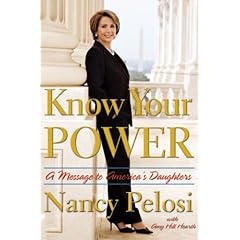
In an online discussion on August 6, Nancy Pelosi discussed her new book, Know Your Power: A Message to America's Daughters, with the listeners of Book World Live. As was written in the Washington Post, the book is about "the women who have inspired her in her personal and professional lives, and about the lessons she wants to pass on to the women in her own family as well as around the country."

One of the participants in the online interview inquired about the role faith has "clear[ly]" played in her life. To this, Pelosi replies:
My faith has always been central to my public service. Growing up in Baltimore, we were raised in a devoutly Catholic family and taught that we had a responsibility to other people and that we must always honor the spark of divinity in each person.

When I became Speaker, I quoted St. Francis of Assisi, the patron saint of San Francisco: "preach the Bible; sometimes use words." I try to follow that guidance in my work - to remember that we are all God's children and we have a responsibility to each other and to our planet - God's creation.

I'm not quite sure what it is about Pelosi that makes it "clear" to this individual that faith plays an important role in her life, and I'm a bit confused about this devout Catholicism she seems to have experienced as a child. "Responsibility to other people," especially as a devoted Roman Catholic, includes a responsibility to the unborn, something Pro-Choice Pelosi lacks in her worldview.

What are we to make of Pelosi bringing her faith into the public square? Of course, she is suggesting in this quote that she utilizes the words of Assisi to justify an inexplicit use of religious language. But this is, in and of itself, a religious argument for a certain religious language and mission. Simply because she or any other liberal doesn't quote the Bible chapter and verse does not make them secular--secularism truly is a myth. As well, what is most clear is that from her own words she is functioning according to a religious worldview. We may not appreciate its contents and how it works itself out, but she has made it impossible for herself to argue against religious worldviews making themself apparent in the public square.

August 5, 2008

Do They Know it Came from the Outlet Store? The Ethics of Worship and Shopping

Today I was listening to Alistair Begg talk about women and their adornments. (1 Timothy 2:9) While its one thing to dress "nice" for church, he suggested it is no place to "dress to the nines." Of course there is a bit of relativity in this, but he was trying to make the principled point that worship is about attending ourselves to God and not doing or wearing anything that would be a distraction. He spoke primarily of over dressing for the occasion or dressing in a way that only our husbands should see and appreciate.

I frequent many websites and blogs of womens speakers and one in particular grabbed my attention recently, Begg's sermon bringing it back to my mind. Her focus in the particular post I was reading was advice on how to buy expensive label clothing without the cost. These would be the labels that are sewn in to the clothing and sold in Saks Fifth Avenue and elite boutiques, where a pair of sandals cost as much as my car payment.

At first, I thought it was cool advice...scour Goodwill, look for damaged items in the stores (to repair yourself) and shop the outlets. How exciting it is to look and feel as if you spent a million dollars on yourself! Think again.

What is the testimony of the million-dollar-look? While it may have literally cost you only pennies to own, it can cost you a lot more. The motive in obtaining expensive labels at discount prices is to give the impression that you spent a lot of money and that your outward appearance is worth such an expenditure. Is that really the impression we want to give? Granted, there are casual items that can be purchased, even at Saks, but today's image-driven culture knows exactly how much was on the original price tag.

Sent via BlackBerry by AT&T

August 1, 2008

Join a Movement: Christian Women Bloggers Network

We talk about many things: parenting, philosophy, cooking, theology, music, pop culture, Scripture, and much more. But in the spirit of Dorothy Sayers, we may differ in a great many ways, but we find similarities as human and in the experience of womanhood.

As Christian women bloggers, join the new network that will bring us together in our sameness and our differences as we connect in the blogosphere and face to face. Be watching for a network gathering in the not so distant future!

July 27, 2008

The "Desperate" Women of Evangelicalism

Housewives we all are not, but according to Stephen Arterburn, well-know Christian counselor and founder of the Women of Faith conference movement, we are a desperate, needy bunch.

In an interview posted by Michael Paulson of the Boston Globe (July 25, 2008) in the Articles of Faith blog, Arterburn was asked if the Women of Faith conferences serve as method of evangelism. He replied, "I call it an inspirational conference. We're trying to inspire women that are in big trouble to hang on. We try to inspire them to live the life that God intended them to live."

Does the fact that around 400,000 women each year attend these conferences provide validity to his assertion that these women are in "big trouble?" Or perhaps this is one of the most dominant movements within the evangelical community that vasts amounts of women have access to.

Whatever motivates women to attend, it is clear that within the subculture of women's ministry, women have been convinced that they are in "big trouble." Motivational and self-help books dominate the women's section in Christian bookstores, women's ministries focus in on her need for encouragement and support, and if I were to take a survey, I'm confident that counseling programs would represent the bulk of advanced degrees held by women's ministry leaders.

It might be that women are in constant need of these self-help resources (books, conferences, etc.) because they are actually in need of something deeper will take them through the difficult times. The therapeutic culture of the church functions such that a solid theology is secondary to addressing the day to day issues we face. In other words, knowing God becomes a response to our "big trouble" instead of preparation for loving God and living in general. When relationships are pursued primarily for what one can get out of it, the relationship suffers.

Though well intentioned, I am concerned that Arterburn's comment and this therapeutic culture of women's ministry perpetuates an attitude of helplessness among Christian women. We ought to envision a ministry that develops women in such a way that their spiritual maturity, their relationship with God, is her ultimate resource in times of need. An anemic women's ministry will always need to be therapeutic. A theologically healthy ministry will produce disciples who naturally replicate and find their needs met at the feet of Jesus, and naturally among one another as Titus 2 models. This isn't to devalue counseling as I know how important it is, but the ministry to women in the church must first be Cross-centered. Knowing God makes it possible for women to help themselves.

July 23, 2008

Blog Talk: Living the Cross Centered Life

Tonite at church is week 3 of our book discussion group, reading Mahaney's "Living the Cross Centered Life." The last couple of weeks have been very busy, having had a loss in our family. So this is my first post on the book since introducing it a few weeks ago.

On page 99, Mahaney writes,

"You're being laid off at work. The test came back...you've got cancer. You're baby-I'm sorry, he's dead. It's a fallen world, and therefore we will all suffer. So we must prepare, because the ideal time to be educated about suffering is never in the midst of it. We need to be trained prior to suffering, so that we may be fully sustained in suffering."

Preventive care is an area where the church needs to develop more of a vision. Don't get me wrong, I'm glad that ministries exist to support those who hurt during their time of pain. But being reactionary only is insufficient. We live in a world of suffering, and that is no cliche. Part of discipleship is helping Believers to navigate this world in all of its complexities.
Sent via BlackBerry by AT&T

July 22, 2008

NARAL on the Secular/Religious Divide

Yesterday I mentioned in a post that fragmented thinking "has taught people to believe that certain matters are to be addressed by their doctors and certain matters are to be addressed by their pastors." In other words, an error often made within the Christian community is the split between the "spiritual" and everything else. Obviously, Christians aren't alone in this regard, perhaps they are taking cues from NARAL?

On NARAL.org, it states: "If you are facing an unintended pregnancy, it is important that you talk about your feelings and emotions with someone you trust, be that a family member, a close friend or a member of the clergy. It is also important that you consult a health care professional to discuss your options."

Did you catch that? You can talk about your feelings and emotions with your clergy--not the truth, but your feelings and emotions. The role of clergy in this circumstance is purely therapeutic where the role of the health care professional is about the facts, the "options." This fact/feeling divide is grounded in assumptions about the nature of religion, that it has nothing to contribute to the decision at hand. By relegating religious leaders to the domain of emotions, it deems them irrelevant to any discussion related to the fate of the pregnant woman and the unborn child. As well, it assumes that abortion is primarily a medical decision and that there are no spiritual dimensions to the situation. They have determined, as an organization focused on "health care," that philosophical/theological reflection has no place in discussing "the options."

It also needs to be pointed out that they believe in the myth of the purely secular, that they and abortion providers have no worldview commitments.

So you're wondering why this is news. It isn't to me, but for some, it needs to be clarified that the worldview being expressed here has a view of religion as fiction, or something created by culture. For them, life begins only at birth because that is when a person begins to be enculturated. The meaning of life isn't found in anything metaphysical, but in the influence of culture who has created meaning for itself. Until birth, there is no meaning, rendering preborn life meaningless.
Sent via BlackBerry by AT&T

July 21, 2008

Staking a Claim: Women, Theology, & Bioethics

Dorothy Sayers, theologian, lecturer, author of detective fiction, and friend to C.S. Lewis, responded to the question of what is a “woman’s point of view” as it pertains to literature and finance. She said “…don’t be silly. You might as well ask what is the female angle on an equilateral triangle.”[1] The point to be taken from this exchange is that for those things which are a matter of basic fact, there is only one perspective and that is a human perspective. As it pertains to other matters, Sayers continues,

“…I prefer to think that women are human and differ in opinion like other human beings…you can not ask for ‘the woman’s point of view,’ but only for the woman’s special knowledge…’”[2]

Women today have differing points of view in matters of bioethics, yet the same experience of womanhood, though always with some exceptions. But the most dominate expression of this experience, this “special knowledge,” is not from the voice of evangelical women who, as theologians, can provide meaning and communicate hope, but from secular feminism. This is not to suggest that there are no evangelical women engaging in theological dialogue, but as it pertains to being an influential, prophetic voice in bioethics—in the academy, church, and in popular culture—few women address bioethical matters in this way. A cross-centered evangelical bioethic offered through the theological voice and experience of women can serve as an apologetic for a Christian worldview, helping to put to rest the suspicion and charges of female oppression by evangelicalism and evangelical bioethics that are often made by secular feminism, charges that view human autonomy as the highest value. In society and within the community of evangelical bioethics, woman as theologian offers a unique and fresh perspective to all levels of discussion, from academic scholarship and education to more public activist roles.

Secular Feminist Bioethics
Women’s issues, especially those related to women’s health and bioethics including abortion, pregnancy, contraception, and reproductive technologies have by default, come under the domain of secular feminism in popular culture. For years, since the second wave of feminism leading to Roe v. Wade until now, these women’s issues have been addressed primarily by secular feminist voices, and by specifically feminist bioethics. Academic journals like The International Journal to Feminist Approaches to Bioethics, blogs like the Women’s Bioethics Project, and popular organizations like NOW and the Feminist Majority exist to develop the next generation in the academy and in popular culture. The website of Women’s Bioethics Project states

Women’s health concerns have always been at the core of the Women’s Bioethics Project’s work. Moving beyond narrow conceptions of women’s health, we will be focusing on issues such as aging, women’s participation in medical research, the impact of traditional care giving roles on women’s lives, and end-of-life decision making. We have a series of initiatives planned to help bring these issues to the attention of the media, increase women’s involvement, and impact public policy.

It is clear that the focus women’s issues is expanding beyond what has been traditionally conceived of as important to women—contraception, abortion rights, infertility, reproductive technologies, and so on. And while feminist bioethics are expanding, with the persuasive power of mythical neutrality, evangelical women as theological bioethicists have yet to speak prominently in the theological academy, church, and in culture to these issues. With all of these voices speaking to women of all ages, and with women eagerly listening, it has to be asked, where are the theological voices of evangelical women? In there book, Living on the Boundaries: Evangelical Women, Feminism, and the Theological Academy, Pohl and Creegan ask similarly, “where are the good women?”[3] The gender discussions within evangelical circles are no doubt a contributing factor to the scarcity of evangelical women as theological bioethicists. But whether complementarian or egalitarian as it relates to women’s roles in the church and family, there is ample support in Scripture for women to be a strong voice in the academy, church and culture without concern for compromising conservative views of gender roles.

Staking a Claim Among Women
One might wonder why theologically-informed female voices need to be available as prominent voices in the church, academy and culture. There are no new metaphysical truths to be uncovered, we have a grasp on what the bible teaches on human dignity and the great commandment to love our neighbor, so why does the gender of the messenger have any relevance? Aren’t the prominent, sound voices of evangelical men in bioethics enough? I am especially thankful for all those I have and continue to learn from in the field, but I also see the gap of influence of women on other women – and on men, who, as a member of the human race, experiences life a bit differently. The way to answer the question about the importance of women’s voices is to see the women who have sought women’s voices due to their “special knowledge,” their experience. The female evangelical theologian in bioethics can offer a fresh and unique perspective, not because she offers new knowledge on the basis of her womanhood, but because she identifies with the same joys and pains of half of the people in our culture. The previously mentioned organizations have a great deal of influence in our culture not because they force their message on women or anyone else, but because women want to hear from them. Women are listening to these women, and these women come from all parts of society including the church. Even further, the fragmentation of faith and reason has led to further splits in our thinking, and quite noticeably between health and reproduction and our spirituality. Concerns about women’s health in the evangelical church often receives limited preemptive attention because this fragmentation has taught people to believe that certain matters are to be addressed by their doctors and certain matters are to be addressed by their pastors.

Crucial to the future of evangelical bioethics is the proactive willingness to develop theologically informed women bioethicists for work in the seminary, in the church, and in culture. Women continue to dominate church membership—60% as recently reported by Barna—and continue to enter into higher education in increasing numbers. Evangelical women who desire theological training find themselves in strange territory, one stating “I guess I’ll be too liberal for most evangelical institutions and too conservative for most mainline schools.”[4]

The Scriptures contain numerous stories of women’s experiences as it relates to matters of reproduction and even end of life scenarios. There are obviously profound theological implications of these stories—the barrenness of Hannah and Sarah, the end-of-life grief of Mary and Martha, sisters to Lazarus—as well, there are practical lessons to be communicated to women in our world today. God cares about the details and he is not uninvolved in our lives. For evangelical women in theology today, the task is to take every thought captive to the obedience of Christ by taking ownership of these bioethical issues that have thus far been dominated by secular feminism.

The scope of this discussion is focused on the value of theologically-informed women’s voices for the sake of women, though it does not preclude the importance of her influence on men. But in terms of God’s calling on the ministry to women, I believe we can find direction for this work in Titus 2.

Typically viewed as instruction for how older women are to mentor younger women in keeping the home, I believe we can with all integrity see the broader implications of this passage in our contemporary culture. Titus 2:3-5 states:

Older women likewise are to be reverent in behavior, not slanderers or slaves to much wine. They are to teach what is good, and so train the young women to love their husbands and children, to be self-controlled, pure, working at home, kind, and submissive to their own husbands, that the word of God may not be reviled.

Bioethical issues never operate in a vacuum, and a decision—whether related to reproductive technologies or end of life questions—will always involve members of one’s own family. For the woman as theologian and bioethicist, with her special knowledge as woman, daughter, and perhaps as wife and mother, has the opportunity to teach “what is good” to women in the academy, church, and culture. But we must be willing to take our place in culture and no longer be willing for women’s issues to be owned by the voice of secular feminism. Through this, we may see the new trends develop in society at large in how we view human nature, life, the unborn, and the disabled. Ultimately, then, women as theological bioethicists have one more way to advance God’s kingdom to his glory. WFC


[1] Are Women Human? Dorothy Sayers Wm. B. Eerdmans Publishing Company (November 15, 2005) p. 41

[2] Ibid, p. 43

[3] Living on the Boundaries: Evangelical Women, Feminism And the Theological Academy. InterVarsity Press, June 2006. Page 31

[4] Ibid, 41.

July 19, 2008

LIVE BLOGCAST: Health Care & the Common Good: Dr. Edmund Pellegrino (Final Thoughts)

All the dimensions of politics and the health care system are designed to care for the individual. Health is a desirable end, medical care is a need.

Should religion be engaged in the dialectical discourse? As Pellegrino discusses this I'm reminded of the works of H. Tristram Engelhardt discussing the role of religion in the public square and the notion of agreement among "enemies."

Autonomy started as a negative right but has become from a right of neglect to a right to demand treatment to the extent of micromanagement at the bedside. While wanting to preserve the autonomy of the patient, we also need to consider the autonomy of the health professional.

In clinical ethics, there need to be absolutes. Without them, morality will be left to the courts.
Augustine says 'an unjust law is no law.' Today conscience clauses are under threat and the value-free doctor is the most desirable.

Pellegrino very interestingly recommends bedside clinical ethics education. It takes a socratic approach, takes it out of the abstract and into reality. It seems this approach brings the clinician into a more intimate relationship with the patient.

"Inane thinking" about the hippocratic oath that pervades bioethics today. Pellegrino says that the hippocratic oath/ethos are not the whole of medical ethics. It is a statement of morality.

LIVE BLOGCAST: Health Care & the Common Good: Dr. Peter Lawler

Peter Augustine Lawler is Dana Professor and Chair of the Department of Government and International Studies at Berry College. He teaches courses in political philosophy and American politics and has won several awards from Berry for doing so.

A truly progressive society would subordinate technological process to personal progress.

John Locke - "My body is my property"
Autonomy trumps in our culture.

Locke - In an individualistic society, the only hold the older people have on the young is money.

Immediate crisis in health care is productivity over care giving.

Care should be given in the most personal way possible, knowing that each human being is more than a human being with interests.

LIVE BLOGCAST: Health Care & the Common Good: Solutions (Dean Clancy - Continued)

Question:
What about illegal immigrants and health care?
Response: Federal mandate that any hospital that takes Medicare must care for anyone who enters ER.

Question:
Would you put a cap on medical malpractice suits?
Response: Would all caps be just? More consideration must be given to the victims of medical malfeasance.